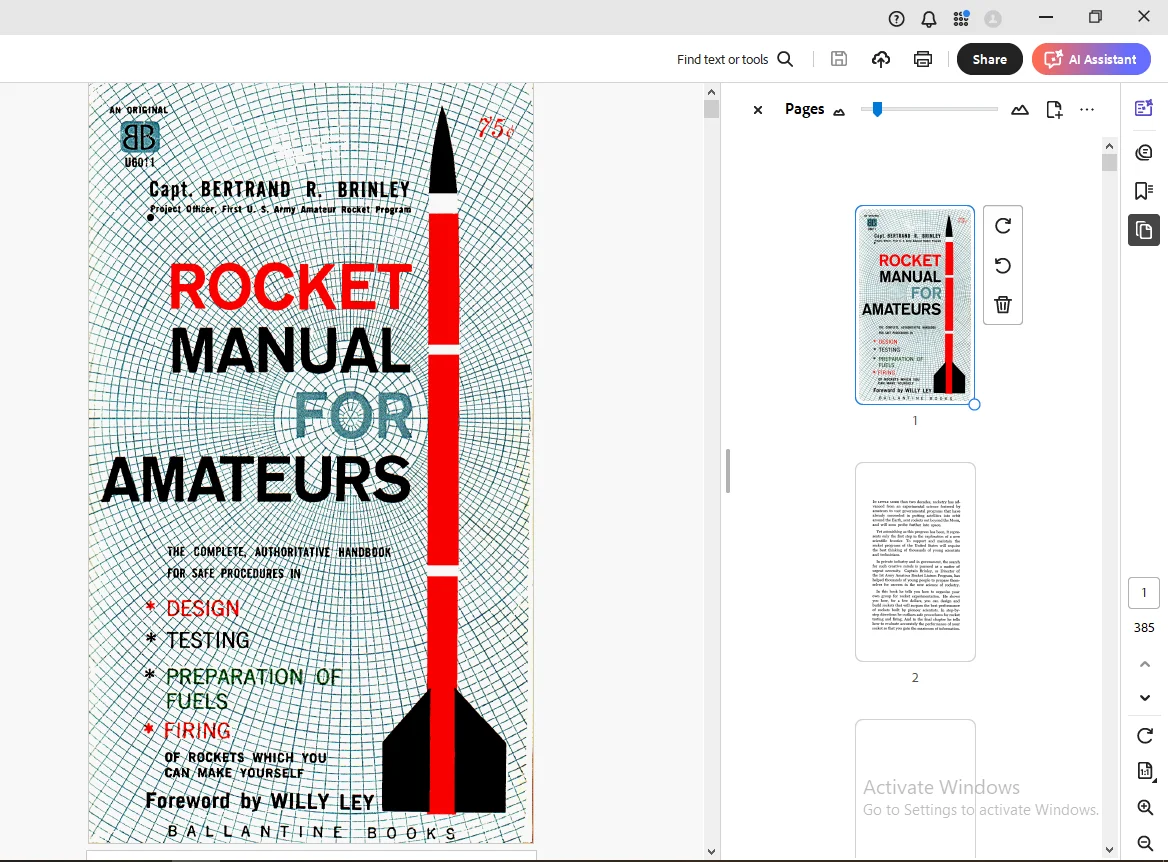
Amateurs For Rocket Manual – PDF DOWNLOAD
$37.95
Amateurs For Rocket Manual – PDF DOWNLOAD
Description
Amateurs For Rocket Manual – PDF DOWNLOAD
FILE DETAILS:
Amateurs For Rocket Manual – PDF DOWNLOAD
Language : English
Pages :385
Downloadable : Yes
File Type : PDF
IMAGES PREVIEW OF THE MANUAL:
TABLE OF CONTENTS:
Amateurs For Rocket Manual – PDF DOWNLOAD
Rocket Manual for Amateurs 1
Title 4
Foreword 6
Table of Contents 9
Chapter 1 – Organization, Safety, and the Scientific Method 13
I Organizing a Rocket Society and a Program of Experimentation 14
Composition 16
The Adult Advisor 17
The Technical Advisor 18
Constitution and Safety Code 19
Model Constitution 20
Safety Code 22
Seeking Technical Help 26
II Safety 29
Personnal and Group Safety Practices 31
III Safety Through Scientific Procedure 33
IV Amateure Rocketry and the Law 36
Chapter 2 – Basic Rocket Design 40
The Nozzle 47
The Rocket Body 48
The Nose Cone 49
The Fins 50
Diaphram and Igniter 50
Propellant 51
Launching the Rocket 51
Chapter 3 – Rocket Propellants 53
I Types of Propellants 55
Liquid Propellants 56
Advantages and Disavantages 58
Combustion Performance of Liquid Propellants 60
Corrosive and Toxic Effects of Liquids 65
Solid Propellants 68
Advantages and Disadvantages 70
Dangers and Hazards of the Solid Propellants 70
Propellant Grain Shapes and Methods of Forming 73
Neutral Burning and the Use of Inhibitors 74
Burning Rate 76
Burning Time 78
Solid Propellants for Amateur Use 78
The Caramel “Candy” Propellant 80
Zinc and Sulfur – Micrograin 83
Other Compositions of Zinc and Sulfur 90
II Safety Rules – Propellant Handling 93
A Handling and Storage 94
B Mixing and Loading 95
Solid and Liquid Propellants 97
Combinations and Characteristics 97
Liquid Propellants 98
Solid Propellants 99
Chapter 4 – Rocket Motor Systems101
I Principles of Propulsion101
II Rocket Motor Design: For Amateurs105
Simplified Nozzle Calculations107
More Advanced Rocket Thrust Chamber Calculations110
1 Combustion Temperature110
2 Nozzle Calculations110
Combustion Chamber113
Mathematical Aids116
Nozzle Exit-to-Throat-Area Ratio119
Coefficient of Thrust120
Expansion Ratio121
Features of Liquid Motor Systems122
Some Advantages of Liquid Systems125
Disadvantages of Liquid Systems126
Some Systems for the Future128
Chapter 5 – More Advanced Rocket Design132
Components 0
Nozzles138
Fin Design143
Nose Cones147
Diaphrams and Igniters150
The Combustion Chamber157
Some Amatuer Rockets You Can Build160
1 A Small Test Rocket160
2 A High Performing 4-Foot Rockets163
3 The Fort Sill – Beta166
4 An Outstanding Amateur Research Rocket168
Chapter 6 – Rocket Instrumentation171
Types and Uses of Instruments in the Amateur Field172
Telemetering Systems and Safety173
Protection of Instruments175
Some Simple Instruments You Can Construct176
Second Stage Ignition Devices176
Recording Accelerometers178
A Coding Disc for Telemetering181
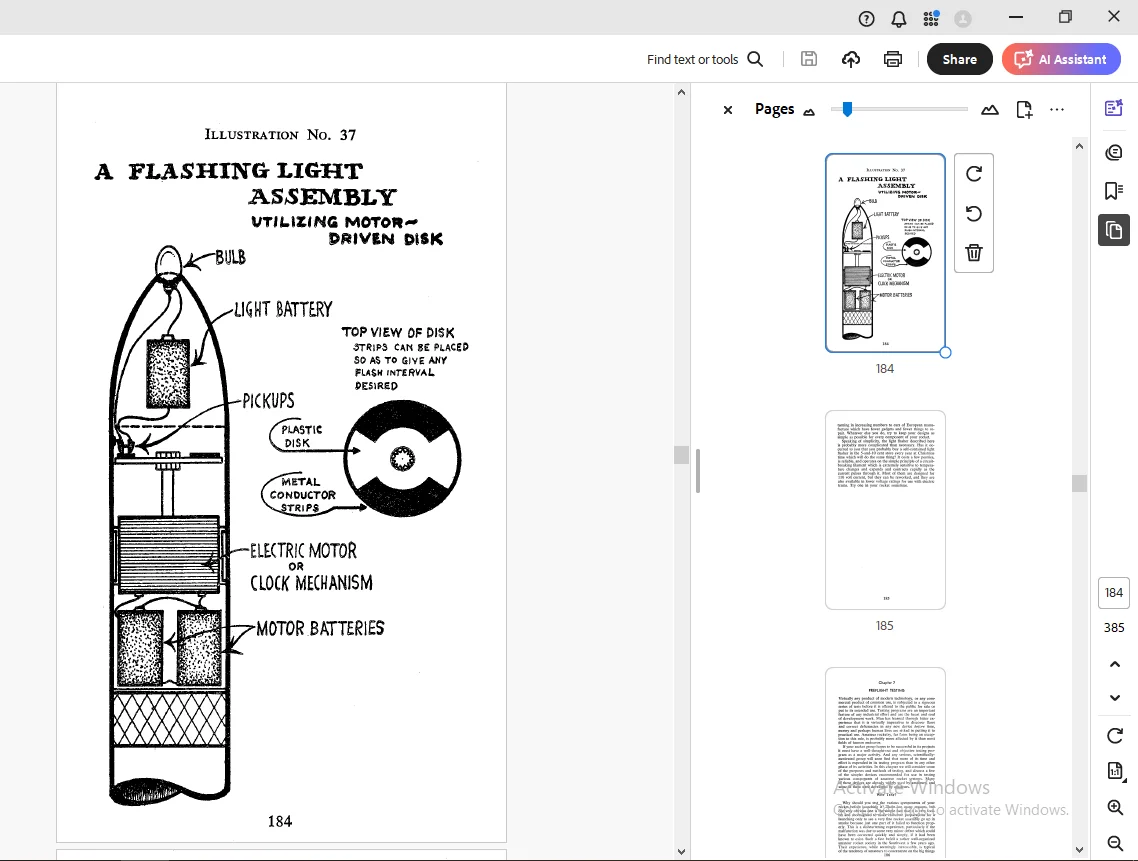
A Flashing Light Assembly183
Chapter 7 – Preflight Testing186
Why Test?186
What Can You Test?187
Some Simplified Test Procedures189
A Basic Static Test Stand189
Thrust-Measuring Devices192
A Rocket Centrifuge196
Measuring Motor Wall Temperature and Stress198
A Device for Testing Bursting Strength200
A Home-Made Wind Tunnel202
A Static Testing Bay202
Trajectory Calculations205
A Simplified Method for Computing Over-all Flight Performance of Small Missiles207
Chapter 8 – Layout and Construction of the Launching Site212
Primary Safety Considerations212
Remoteness213
Cover213
Limited Observation213
Assignment of Tasks213
One-Man Control213
“Scouts Out” Security214
Firefighting and First Aid214
Routine214
Layout of a Launching Site214
Launching Site217
Launching Area218
Launching Pit218
Impact Area218
Impact Point218
Impact Zone218
Road Block218
Road Guard218
Range Guard218
Countdown218
Fueling Pit218
“By the Numbers”218
Protective Pits and Barricades219
The Launching Pit226
The Fueling Pit232
Observer Bunkers239
Range Guard Shelters243
Spectator Bunkers245
Latrines and General Field Sanitation245
Communications245
The Launching Rack251
Remote Control Firing Systems253
Chapter 9 – Safe Range Procedures at the Launching Site259
I Positions and Responsibilities260
Range Officer260
Safety Officer260
Fueling Supervisor260
Spectator Control Officer260
Key Man261
Fuelers261
Pit Men261
Range Guards261
Observers and Trackers261
Recorders and Computers261
First-Aid Men261
II Range Procedure262
Prefiring Procedure264
1 Briefing264
2 Firing Stations-Scouts Out264
3 First Reports265
4 All Clear in the Launching Area265
5 Fueling265
6 Positioning266
7 Take Cover266
Firing Procedure267
8 Safety Check-Second Reports267
9 Ready on the Right-Ready on the Left267
10 Prepare to Fire267
11 Safety Officer Clears267
12 Countdown268
In-Flight Procedure268
13 Maintain Cover-Open Firing Switch268
14 Observation and Tracking269
15 Impact Observation269
Postfiring Procedure269
A For a Successful Firing269
16a All Clear269
17a Reset Safety Devices269
18a Reporting of Data270
19a Recovery of Rocket270
B For an Unsuccessful Firing270
16b Handling a Misfire or “Dud” Rocket271
17b All Clear272
18b Reset Safety Devices273
19b Reporting of Data273
20 Critique and Evaluation273
Chapter 10 – Tracking275
How to Track Your Rocket – How to Evaluate its Performance275
A Basic System for Tracking279
Use of the Plotting Board286
The Principle of Intersection289
The Principle of Triangulation – Chart B293
Determining Alititude from Reported Data – Use of Chart C296
Observer Methods and Techniques299
Measurement of Angles300
Measuring Vertical Angles302
Use of the Army Mil Scale Measuring Angles304
Other Methods of Estimating Altitudes309
Use of the Camera317
Tracking by Radio318
Aids to Visual Tracking318
Lights, Smoke and Vapor Trails319
Aids to Determining Point of Impact326
Appendixes 0
Appendix A – Summary of State Laws Affecting Amateur Rocketry332
Appendix B – First-Aid Advice for Rocket Groups336
The Three Lifesaver Steps in First Aid336
A Stop the Bleeding336
B Protect the Wound337
C Prevent or Treat Shock337
First-Aid Measures for General Injuries338
A Chest Wounds338
B Belly Wounds338
C Jaw Wounds339
D Head Wounds339
D’ Severe Burns340
E Fractures340
First Aid for Injuries Sustained From Rocket Fuels343
I Oxidizers343
II Propellant Fuels345
Appendix C – Useful Tables350
Table of Altitudes350
Distance in Feet from Observation Point to Point “X” (Base Distance)351
Quantity-Distance Table352
Thickness of Materials Required to Protect Against Penetration of Fragments from Projectiles and Bombs at a Distance of 60 Feet353
Functions of Numbers354
Natural Trigonometric Functions356
Logarithms 100 to 1000360
Decimal of an Inch and of a Foot362
Appendix D – Rocket Symbols363
Appendix E – Rocket Formulas366
Propellant Performance366
Thrust Chamber Calculations366
Nozzle Dimensions367
Lengths of Convergent and Divergent Sections for Nozzles Having a Convergent Angle of 30* and a Divergent Angle of 15*368
General Formulas368
Ballistic Formulas369
Appendix F – Glossary of Missile Terminology370
Appendix G – Bibliography381
The Author383
DESCRIPTION:
Amateurs For Rocket Manual – PDF DOWNLOAD
FOREWORD:
- I know in advance of publication that this book will be subjected to strong criticism by some people and will be hailed by others with a good chance of being labeled “controversial.” Rocket experimentation by amateurs just happens to be one of the areas where people fail to see eye to eye.
- Nor is this controversy of whether people should be permitted to do as they please (within reason, of course) or whether Something Should Be Done as new as it looks. Even before the space age was headlined by the beeps from Sputnik No. 1 there were dedicated groups of amateur rocket experimenters who could not only point to successful flights but to an unblemished safety record.
- They could also tell stories of harassment of various kinds. But it is true that the problem has assumed major pro- portions since Sputnik No. 1. For a year or so virtually every youngster wanted to build rockets. And there have been accidents, even fatal ones.
- The reaction to these accidents took different forms. On the one hand several com- panies which are in the rocket business issued safety manuals free of charge. So did the Army. Somewhat later the Armed Forces began to assist amateurs actively, as is told in the body of the book by the man who did much of the assisting. On the other hand the large and respected American Rocket Society came out repeatedly against any and all amateur experimentation.
- The two arguments most often advanced are (A) it is not safe and (B) the amateurs will not be able to discover something that the professionals have not already done. As for argument (A), the simple fact of life is that it can be highly unsafe but that accidents are always due either to carelessness or simple lack of knowledge. Both of these can be remedied. As regards argument (B), my favorite story is that at one university I saw a medical student dis- sect a human hand. I could have told him that he would not learn anything that could not be found in medical texts, with fine colored illustrations, and that he had absolutely no chance of making a discovery. My statements would have been perfectly correct, yet have missed the mark by several miles.
- That student did not lift out the various blood vessels and muscles to find something new for others, he did it for himself, in order to learn and to gain practice. I might also ask where the professionals came from originally. The young Russian student of engineering, Blagonravov, certainly was not a professional back in 1932 when he built his first rocket.
- And then there was a group of people on the outskirts of Berlin building rockets. Their names were, in approximate order of age: a high-school teacher called Strachea man with a degree in engineering but no engineering practice (because of the first World War and the subsequent inflation) called Nebel a man who had studied mainly zoology and
- who had thought he would become a geologist, myself; a young man who had begun to study engineering (interrupted by the inflation, too) and who happened to be the only one with machine- shop experience, Klaus Riedel; a high-school graduate who was beginning to study engineering, Wernher von Braun; and finally, a high-school boy who intended to study engineering later on, Helmuth Zoike. This group of rank amateurs built the first German liquid fuel rockets.